
DC fast charging is the quickest way to refill an EV battery, with some compatible cars charging from 10% to 80% in roughly 15–30 minutes at a 150–350 kW station, compared with several hours on a home wallbox. That speed carries a premium: on-demand rates at some major European networks sit around €0.60–0.80 per kWh, more than twice the average EU household electricity price reported by Eurostat.
Most drivers rarely need it. According to the IEA's Global EV Outlook 2026, EV owners worldwide charge privately almost 75% of the time and use public fast chargers only about 10% of the time. Yet fast charging raises persistent questions: why power drops at higher states of charge, why a cold battery charges more slowly, and whether frequent high-power sessions shorten battery life.
The answers below are based on ADAC charging-curve measurements, Geotab's fleet data and manufacturers' own specifications.
What Is DC Fast Charging (Level 3) and How Does It Work vs Level 2 AC?
DC fast charging, often called Level 3 charging or rapid charging in the UK, feeds direct current into the battery from a converter built into the charging station, bypassing the car's onboard AC charger.
Fastned puts the distinction simply: batteries store energy as direct current, while the grid supplies alternating current. On AC charging, the car's onboard charger handles the conversion, commonly at 3.7–22 kW; a DC fast charger's station-side converter can deliver much higher power.
Kia's EV6 specification shows the gap: 10–100% takes 7 hours 35 minutes on 11 kW three-phase AC, while 10–80% takes 18 minutes on an 800 V DC charger rated at 260 kW or more.
Public DC stations commonly span 50–400 kW, and IONITY alone operates more than 4,800 high-power charging points at up to 400 kW. In practice, however, charging power is limited by the car's own peak, up to 260 kW on the Hyundai IONIQ 5, for example. Connectors include CCS2 in Europe, CCS1 and NACS in North America, and CHAdeMO on older Nissan Leafs.

Why Speed Drops After 80% (and in the Cold)
Charging power is generally highest at lower states of charge and falls as the battery fills, as the battery management system reduces charging power to protect the cells. ADAC's 2026 measurements show that charging power drops significantly at higher states of charge, hence the common 10–80% convention for fast-charging comparisons and journey planning.
Cold hurts more. At −7 °C, ADAC's VW ID.3 started below 50 kW instead of reaching up to 125 kW in warm conditions, while a cold Tesla Model Y spent about 18 minutes heating its battery before charging, stretching the total stop from 33 to 56 minutes. Idaho National Laboratory found that Nissan Leaf charging was roughly three times slower under the coldest conditions in its real-world dataset.
On many EVs, battery preconditioning can trigger automatically when you set a fast charger as the destination in the car's navigation system; see driving an EV in winter.
Pros and Cons of DC Fast Charging: Speed vs Battery Degradation
The upside is time. Hyundai's IONIQ 5 Long Range charges from 10–80% in 18 minutes at a 350 kW DC station but takes 76 minutes at a 50 kW station, so choosing the faster charger can save almost an hour on a single stop.
To get close to that figure:
- Pick an empty charging unit where possible: ADAC notes that some shared 150 kW units can split to 75 kW per car, while 300 kW units can split to 150 kW per car.
- Arrive with a low state of charge.
- Navigate to the charger in-car so the battery can precondition, if the vehicle supports automatic preconditioning.
- Consider unplugging around 80%, as charging power generally tapers at higher states of charge.
The downside of frequent high-power DC fast charging is faster battery wear from higher currents and temperatures, plus a per-kWh price that can be two to three times the average household electricity price.
Geotab's analysis of more than 22,700 vehicles across 21 models shows 2.3% average yearly degradation. However, vehicles with less than 12% of sessions on DC fast charging averaged 1.5% a year, while frequent users of high-power DC fast charging averaged up to 3.0%. That fleet-heavy sample uses fast charging more frequently than private EV drivers typically do.
Idaho National Laboratory's testing of 2012 Nissan Leaf battery packs frames an early worst-case example: the DC-fast-charged pack reached 20% capacity fade after 540 cycles versus 660 cycles with AC Level 2 charging. That passively cooled pack represents older battery technology rather than a forecast for modern liquid-cooled cars, and Fastned states that frequent fast charging hardly affects battery life.
The practical rule: use AC charging at home and reserve DC fast charging mainly for trips. EV charging time explained compares both.
How Much Does DC Fast Charging Cost? Price per kWh and Rates
Expect roughly €0.60–0.80 per kWh at some major European fast-charging networks. Fastned's tariff page (checked September 2026) lists standard rates of €0.69/kWh in Germany, €0.77 in the Netherlands and Belgium, and €0.61 in France; its €5.99/month Gold subscription cuts these to €0.49, €0.54, €0.54 and €0.43, respectively.
By comparison, Eurostat puts the average EU household electricity price at €28.96 per 100 kWh (about €0.29/kWh) for the second half of 2025, with Germany at €38.69 per 100 kWh.
Combining those figures, Fastned Germany's standard rate costs about 2.4 times the EU household average. At 18 kWh/100 km, charging at the EU household average works out to roughly €5.21 per 100 km against €12.42 at the fast charger, around €721 more per 10,000 km.
Billing models add variation: per-kWh pricing is common in the EU, but some networks also use per-minute charges, idle fees can apply after charging ends, and subscriptions generally pay off only above a certain amount of charging.
Why so expensive? A 150–400 kW station needs commercial charging hardware and a high-capacity grid connection, with electricity costs that can include demand charges, whereas a Level 2 wallbox can cost a few hundred euros. AFIR (Regulation (EU) 2023/1804) also requires charging pools for light-duty EVs along the TEN-T core road network, in each direction of travel and no more than 60 km apart, to provide at least 400 kW by the end of 2025 and 600 kW by the end of 2027. For the domestic side, compare home charger installation cost.

Can You Have DC Fast Charging at Home?
Full-speed DC fast charging at home is technically possible but impractical for nearly every household. A 50 kW unit typically needs a three-phase supply and substantially more grid capacity than a typical domestic connection, plus commercial-grade hardware costing many times more than a wallbox and, often, utility approval.
What the market calls "home DC" is different: low-power DC wallboxes of roughly 10–25 kW and bidirectional vehicle-to-home units, which are generally intended for applications where V2H energy management, rather than maximum charging speed, is the goal.
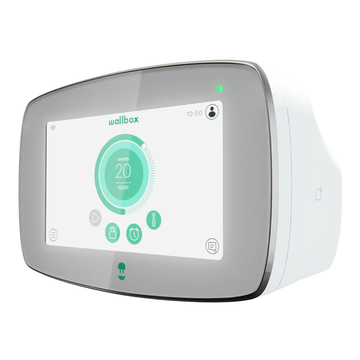
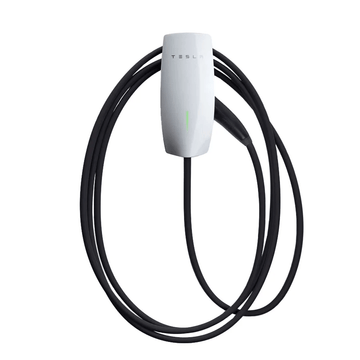
Level 2 AC is the realistic answer. An 11 kW three-phase wallbox can refill a typical 60–80 kWh battery overnight, and 22 kW suits cars whose onboard chargers accept that power. Compare single-phase vs three-phase and 7 kW vs 22 kW before choosing.
A short decision path:
- Single-phase supply: up to 7.4 kW wallbox
- Three-phase supply and long daily distances: 11 kW or 22 kW, depending on the car's onboard charger
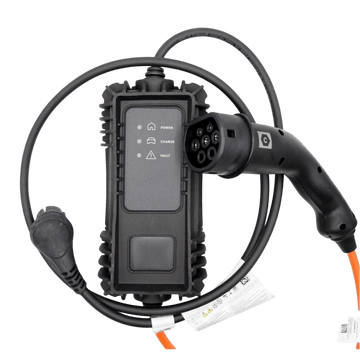
- Cable: tethered or untethered, with a suitable Type 2 cable length
- Smart features such as load balancing and RFID
EVChargers.eu, run by Julius, an EV driver since 2018, stocks7 to 22 kW wallboxes, including the three-phase Aurora 22 kW station, with dispatch within 2 business days and free EU shipping. The next step is installing a home charger.

DC Fast Charging: FAQ
Which Vehicles Support DC Fast Charging?
Nearly all modern battery EVs support DC fast charging, but many plug-in hybrids and some older EVs do not. To check, look for a CCS port (Type 2 with two extra DC pins in Europe), NACS on North American-market vehicles, or CHAdeMO, and find the maximum DC kW figure in the spec sheet.
Peak acceptance varies widely, however: from roughly 50 kW on older models such as the BMW i3 to around 260 kW on current 800 V models such as the Hyundai IONIQ 5. Older Nissan Leafs use CHAdeMO, which is not required on new European DC charging points.
Why Does My EV Say "DC Fast Charging Unavailable"?
On a Tesla Model 3 or Model Y, DC fast charging can become unavailable for several reasons, including a charge-port latch problem, charging-equipment issue or a vehicle fault.
First, check that the connector is fully inserted and try another charger. If the problem persists at multiple charging locations, the vehicle may need service. AC charging may still work in some cases.
How Fast Is DC Fast Charging and How Long Does It Take?
A 50 kW charger can typically add around 150–250 km of range per hour, while 150–350 kW stations can take a compatible car from 10% to 80% in roughly 15–30 minutes.
Four major factors affect the real figure: the car's maximum acceptance rate, state of charge on arrival, battery temperature, and whether the charger shares power with another vehicle. Since charging generally slows at higher states of charge, unplugging around 80% can save time and may help avoid idle fees once charging ends.
How Do I Find DC Fast Charging Stations Near Me?
Use a charging map app such as PlugShare or A Better Routeplanner, a network app (Fastned, IONITY, Tesla) or the car's built-in navigation, and filter by connector type (CCS2 in Europe) and minimum power (50 kW, 150 kW or more).
Check real-time availability where available and recent user reviews to help avoid broken or occupied stalls, and plan stops along major roads, where AFIR sets distance and capacity requirements for charging infrastructure on the TEN-T road network.
Expectations matter, though. According to the EEA, about 81,700 of 632,254 public charging points in the EU in 2023 were DC, roughly one in eight. Most public charging points remain AC, so a Type 2 charging cable still belongs in the boot.
DC fast charging earns its place on travel days, yet with roughly three quarters of charging happening privately, the wallbox at home often matters more for everyday EV use than a 350 kW post on the motorway. Overnight AC charging also avoids frequent high-power DC charging and can keep charging costs closer to household electricity rates.
At EVChargers.eu, Julius personally answers pre-sale questions about which 7 kW, 11 kW or 22 kW station suits a given home connection. Browse the home charging stations, and if you are unsure whether your supply is single-phase or three-phase, send a message before ordering. Dispatch takes up to 2 business days, shipping is free across the EU, and products can be returned within 14 days, subject to the return conditions.