
A solid-state battery is, as of 2026, one of the most anticipated but not yet mass-market upgrades in electric vehicles: no mass-market EV carries a true all-solid-state pack, and the International Energy Agency says the technology is still at the prototype stage. Mercedes-Benz puts its potential at up to 450 Wh/kg at cell level, while automotive-format cells validated by Stellantis and Factorial have reached 375 Wh/kg.
That gap between potential and measured performance is where much of the confusion starts. Headlines can merge Toyota's 1,000 km liquid-electrolyte target with its 10-minute solid-state charging target, QuantumScape markets a cell that still contains liquid catholyte as “solid-state”, and semi-solid packs such as MG's blur the label further. A buyer therefore needs verified figures separated from projections.
Those verified figures cover four things: how solid-state compares with lithium-ion, which carmakers actually have test vehicles running, why yield and pressure management remain challenges for mass production, and what changes at the home wallbox. The last point is the practical one, since the cell chemistry evolves but the Type 2 inlet and the on-board charger still determine the maximum AC charging rate available to the battery.
How Do Solid-State Batteries Work?
A solid-state battery replaces the liquid or gel electrolyte of a conventional lithium-ion cell with a solid electrolyte, which can be made from ceramic oxides, sulfides or solid polymers. That swap can permit a lithium-metal anode in place of graphite or silicon-based anodes, and lithium metal can significantly increase energy density.
Liquid electrolytes can be flammable and can limit anode choice. A solid ceramic separator, by contrast, is nonflammable, according to QuantumScape's technology description, and is designed to prevent the lithium-metal anode from short-circuiting. The cell can therefore potentially pack more energy into the same mass.
Mercedes-Benz states that the technology “has the potential” to reach 450 Wh/kg at cell level. However, that is stated potential, not production reality: automotive-format cells such as QuantumScape's QSE-5 at about 301 Wh/kg and Factorial's FEST at 375 Wh/kg remain below it.
One physical characteristic matters later. Lithium-metal cells can expand and contract during charging and discharging, so some solid-state designs require external pressure to maintain contact, which is why the Mercedes-Benz EQS test vehicle's battery uses pneumatic actuators.

All-Solid-State vs Semi-Solid-State
A semi-solid-state battery combines a solid electrolyte with a liquid fraction. Huo and Janek (National Science Review, April 2023) estimate that share at 10–15 wt% for current semi-solid-state batteries and propose under 5 wt% for “almost-solid” cells. These are researcher estimates, not standardized specifications.
Even flagship developers blur the line. QuantumScape pairs its solid ceramic separator with an organic liquid catholyte on the cathode side, so “solid-state” on a spec sheet does not necessarily mean zero liquid.
The IEA's Global EV Outlook 2025 warns that the first commercialised “solid-state batteries” may be semi- or quasi-solid because they can help address scale-up challenges and reduce production costs. Huo and Janek similarly argue that “almost-solid” batteries may be the most feasible route.
Solid State Battery vs Lithium-Ion: Energy Density, Safety, Charging and Cost Compared
On paper, solid-state batteries can outperform lithium-ion batteries in energy density, fire safety and fast-charging potential. Today, they remain behind on cost, proven cycle life and commercial availability.
Better in the lab, not yet in the driveway.
|
Metric |
Lithium-ion (NMC / LFP) |
Solid-state |
|
Energy density (JRC 2025) |
NMC 150–300 Wh/kg; LFP 120–240 Wh/kg |
440 Wh/kg lithium-sulfide-NMC; 220 Wh/kg lithium-ceramic-NMC |
|
Cycle life |
NMC 1,000–1,500; LFP 2,000–8,000 |
QuantumScape >1,000 at >95% retention; Factorial 600+, still qualifying |
|
Fast charging |
Vehicle-proven |
QSE-5 10–80% in 12.2 min; FEST 15–90% in 18 min |
|
Operating temperature |
Range drops in cold |
FEST tested from -30 °C to 45 °C |
|
Cost 2025 (JRC, EUR/kWh) |
NMC 75–85; LFP 60 |
Lithium-sulfide-NMC 95 |
|
Availability |
Mass production |
TRL 6 large pilot (IEA 2025) |
The “double the range” claim does not follow from a direct comparison of these figures. Top-of-range NMC at 300 Wh/kg against 440 Wh/kg solid-state represents about a 47% gain in gravimetric energy density, not 2x. Volumetrically, Samsung SDI's 900 Wh/L anode-less cell is about 40% above its current mass-produced prismatic cells, implying roughly 640 Wh/L for the comparison baseline.
Safety follows the same pattern: different failure behaviour, not fireproof. A 2026 peer-reviewed safety review concludes that all-solid-state batteries "are not intrinsically safe", and most solid-electrolyte/lithium composites show signs of thermal runaway between roughly 270 and 350 °C.
Cold weather is where the solid electrolyte changes the mechanism. Lithium-ion batteries lose winter range partly because liquid electrolyte viscosity rises and ionic conductivity drops. A Nature Communications lab cell (January 2025) retained 83.5% capacity at -30 °C after 100 cycles, yet it was a low-loading laboratory cell, not a vehicle pack, so today's drivers still need sound habits for operating an EV in winter.
One cost caveat: JRC's EUR figures are not clearly labelled as cell or pack costs, while BNEF's 2025 pack average of $108/kWh (LFP $81/kWh, NMC $128/kWh) comes from a different data series. Do not equate them.
Solid State Battery Cars: Toyota, Mercedes-Benz, Stellantis, Nissan, BYD and MG
Verified solid-state vehicle results so far come from development or demonstration vehicles, not mass-market production models. The table separates dated status from claimed figures and published targets.
|
Manufacturer |
Partner |
Status (dated) |
Claimed figures |
Target |
|
Toyota |
Sumitomo Metal Mining (cathodes) |
Mass-production cathode collaboration announced Oct 2025 |
+20% range, 10–80% in ≤10 min; advanced version +50% |
2027–28 |
|
Mercedes-Benz |
Factorial |
EQS test car, 1,205 km Stuttgart–Malmö, Aug 2025, 137 km remaining |
+25% usable energy at comparable pack size |
End of decade |
|
Stellantis |
Factorial |
77 Ah FEST cells validated Apr 2025; Dodge Charger Daytona road testing from June 2026 |
375 Wh/kg, 15–90% in 18 min |
Not stated |
|
Nissan |
In-house |
Development |
~2x energy density, lower cost |
FY2028 |
|
Samsung SDI |
Cell maker |
Pilot samples supplied from 2023 |
900 Wh/L, anode-less |
2027 |
|
QuantumScape |
VW/PowerCo |
QSE-5 B-samples shipped 2024 |
301 Wh/kg, 844 Wh/L, ~5 Ah |
Not stated |
|
BYD |
In-house |
Development |
Not stated |
First EV from 2027; mass production from 2030 |
|
MG/SAIC |
In-house |
Semi-solid battery rollout |
Semi-solid |
2026 |
|
Donut Lab |
Independent |
Announcements only |
Unverified |
Not stated |
The “Toyota: 1,000 km and 10-minute charge” headline mixes two roadmap rows. The 1,000 km target belongs to Toyota's next-generation liquid-electrolyte “performance” battery, whereas the 10-minute charge target belongs to Toyota's solid-state battery. They are not the same product.
On the policy side, the EU Battery Booster Facility will mobilise up to €1.5 billion from ETS revenues for EEA cell plants of at least 10 GWh, with the call for proposals launched in Q3 2026. But timelines have shifted before: Stellantis's planned 2026 demonstration fleet has so far resulted in one development vehicle entering road testing.
Where Tesla and Elon Musk Stand on Solid-State Batteries
Tesla has not publicly announced a solid-state battery programme. Its documented strategy keeps liquid-electrolyte lithium-ion batteries at the centre: in-house 4680 cylindrical cells alongside supplier-sourced LFP cells for some models.
Musk has publicly expressed skepticism about solid-state battery timelines and cost competitiveness. Tesla's strategy instead emphasizes scaling existing lithium-ion technologies, while BNEF's record-low 2025 pack prices illustrate the continuing cost improvements in lithium-ion batteries.
Solid-State Battery Problems: Why Mass Production Keeps Slipping and When It Will Arrive
A core problem is manufacturing at scale, not just chemistry on paper. Cells reaching about 301–375 Wh/kg already exist; automotive-scale production of millions of them at consistent yields does not yet.
The main engineering obstacles include:
- Cost and yield of thin ceramic or sulfide electrolyte layers produced at scale.
- Lithium dendrites growing through the solid electrolyte and causing short circuits.
- Interfacial resistance and instability where the solid electrolyte meets the electrodes.
- Pressure and temperature sensitivity: some lithium-metal stacks require contact pressure, hence Mercedes-Benz's pneumatic actuators and Stellantis's mechanical architecture.
- Cycle life at automotive scale: Factorial's FEST cell has demonstrated 600+ cycles, while production NMC typically delivers about 1,000–1,500.
The same pressure and volume changes help explain why solid-state cells cannot simply be retrofitted into existing EVs. Since some cells expand and contract during cycling, the pack structure, cooling and pressure system may need to be re-engineered around them.
So what actually exists in 2026? Thin-film solid-state cells in small-scale applications, OEM road-test vehicles, and semi-solid batteries in commercial vehicles. A mass-market all-solid-state EV does not yet exist; the IEA describes almost- and all-solid-state batteries as still at the prototype stage, while Toyota targets 2027–28 and BYD plans its first all-solid-state EV from 2027.
Cost points the same way. On JRC figures, solid-state sits at about 95 EUR/kWh against 75–85 EUR/kWh for NMC, suggesting that initial deployment may favour premium models. Until then, the types of EV batteries in showrooms and how long EV batteries last remain largely lithium-ion questions.

Solid-State Batteries in Phones, Power Banks and Other Devices
Thin-film solid-state cells have been used for years in small electronic and medical devices, including some RFID tags and wearables. Yet no mainstream smartphone uses an all-solid-state main battery as of 2026.
Power banks marketed as "solid state" often rely on gel or semi-solid electrolyte cells. They can offer lower fire risk, better thermal stability and thinner form factors, but may cost more than comparable conventional lithium-ion units. Check whether the specification says all-solid-state or semi-solid-state before paying the premium.
Weight-sensitive niches may come next. Motorcycles, e-bikes and drones can benefit from higher Wh/kg, while space and defence applications can value wide operating-temperature ranges. Donut Lab's announced cells fit the first category, but its performance claims remain unverified.
Consumer electronics may therefore see semi- or almost-solid cells before all-solid ones, mirroring the IEA's expectation for EVs.
What Solid-State Batteries Change for Home EV Charging (and What They Don't)
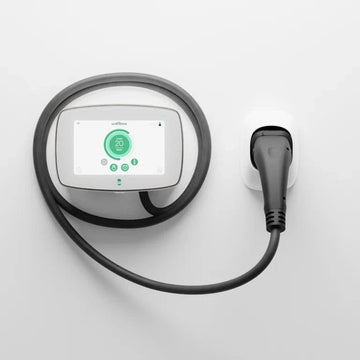
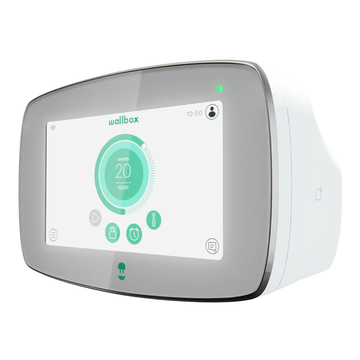
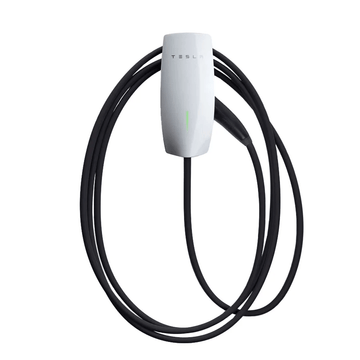
Solid-state changes the cell, not the socket. In Europe, Type 2 remains the standard connector for AC charging and CCS Combo 2 for DC charging, while home AC charging speed is limited by the car's on-board charger and the available AC supply, not by battery chemistry alone.
The Peugeot E-5008 illustrates it: an 11 kW three-phase on-board charger is standard, with 22 kW optional, while DC charging reaches up to 160 kW on the 98 kWh version. That roughly 15x difference between 11 kW AC and 160 kW DC mainly reflects the fact that AC charging passes through the on-board charger, whereas DC fast charging bypasses it.
Larger-capacity packs make slow charging take longer, because there are more kWh to refill at the same charging power. Approximate charging time equals kWh divided by kW: 98 kWh takes about 27 hours at 3.6 kW, 9 hours at 11 kW and under 5 hours at 22 kW. A 100+ kWh pack can therefore make dedicated home charging stations more practical than lower-power charging.
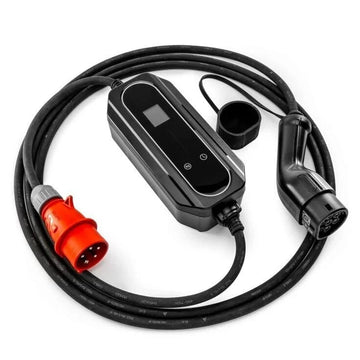
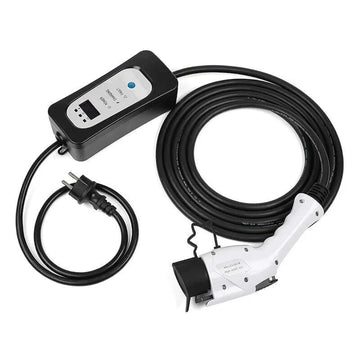
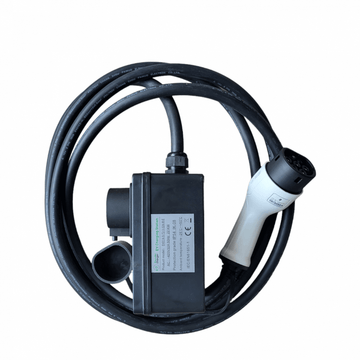
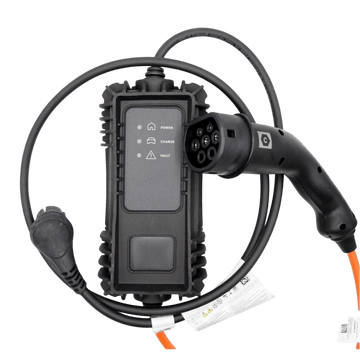
The buying rule stays largely chemistry-independent: match the cable and wallbox to the car's on-board charger and available electrical supply. An 11 kW car can use1 1 kW charging cables; a 22 kW car needs a cable rated for 22 kW to charge at that power, such as a 22 kW Type 2 cable. Bidirectional charging additionally requires compatible vehicle and charging equipment.
EVChargers.eu founder Julius, an EV driver since 2018, personally advises customers on choosing the right charging equipment for their needs.

Solid-State Battery: FAQ
Are There Any Solid-State Batteries Yet?
Yes, but true all-solid-state batteries remain limited to small-scale production and testing. OEM road-test vehicles such as the Mercedes-Benz EQS and Dodge Charger Daytona development car use lithium-metal solid-state batteries, while semi-solid batteries are already commercial. However, no mass-market EV uses a true all-solid-state battery in 2026.
What Does Elon Musk Say About Solid-State Batteries?
Musk has expressed skepticism about solid-state battery timelines and cost competitiveness rather than publicly backing the technology. Tesla's documented battery strategy remains focused on lithium-ion, including in-house 4680 cells and LFP cells.
How Much Does a Solid-State Battery Cost?
No consumer market price exists for all-solid-state EV cells yet. JRC figures list solid-state at about 95 EUR/kWh against 75–85 EUR/kWh for NMC and 60 EUR/kWh for LFP, without clearly identifying these figures as cell or pack costs. Manufacturing complexity and low yields can contribute to the premium, and power banks marketed as "solid state" can cost more than conventional lithium-ion equivalents.
What Is a Semi-Solid-State Battery?
A hybrid cell pairing a solid or gel electrolyte with a liquid fraction that researchers estimate at 10–15 wt%. MG/SAIC and Nio use or plan to use these batteries because they require fewer manufacturing changes, and marketing can blur the label, as the definition section above explains.
Which Companies Are Leading Solid State Battery Development?
Three groups are active in solid-state battery development. Carmakers Toyota, Mercedes-Benz, Stellantis, Nissan and BYD run vehicle programmes; cell makers Samsung SDI, CATL and Panasonic develop the technology; pure-play developers QuantumScape, Solid Power and Factorial develop or supply cells. Several are publicly listed, hence the "solid state battery stocks" searches. That is background only, not investment advice.
Whatever cell eventually arrives, EVs with lithium-metal packs in Europe can still use Type 2 for AC charging and charge at the rate allowed by the car's on-board charger and available AC supply. And if a denser pack results in more kWh to refill overnight, a 3.6 kW connection becomes less practical, not more.
That is why the sizing rule holds today: match the cable and wallbox to the on-board charger rating and available electrical supply, not the battery chemistry. At EVChargers.eu, Julius answers those questions personally, so if you are unsure whether your next car needs 11 kW or 22 kW at home, browse the EV wall chargers or write to info@evchargers.eu for a straight answer before you order.