
If you are wondering what a CCS charger is, the direct answer is that it is a common DC rapid charger at motorway charging hubs in Europe, using the Combo 2 connector that Regulation (EU) 2023/1804 (AFIR) specifies for public DC charging points. In North America, the same system appears as Combo 1, built on the Type 1 connector instead of Type 2.
The confusion usually starts at the car. A new EV owner sees one large inlet with a flap, reads "CCS" in the manual, then encounters Type 2, CHAdeMO and Tesla Supercharger labels at public stations without knowing which ones are compatible. That uncertainty affects which cable you carry, whether your car can use a 350 kW charger, and what an imported vehicle can plug into at all.
The sections below settle those questions using the connector standard IEC 62196-3, the DC charging-station standard IEC 61851-23 and network practice from IONITY, Fastned and Tesla. You will see why the car limits the charging speed, why the DC cable normally belongs to the station, and where a Type 2 charging cable still does the everyday work for a CCS car.
What Is a CCS Charger? The Combined Charging System Explained
A CCS charger is a DC rapid charger that uses a Combo connector: Type 2 in Europe and the UK or Type 1 in North America, with two large DC pins added underneath. One vehicle inlet handles both AC and rapid DC charging, which is the main point of the Combined Charging System.
The word "combined" reflects the system's design: the CharIN Design Guide (V7, 2019) states that only one charging interface is required at the vehicle for single-phase AC, three-phase AC and ultra-fast DC charging. The U.S. DOE Alternative Fuels Data Center puts it more simply: the DC fast-charging connector adds two bottom pins.
CCS is based on open international standards. IEC 62196-3 defines the connector requirements, IEC 61851-23:2023 governs DC charging equipment, and DIN SPEC 70121 plus the ISO 15118 family handle car-to-charger communication. CharIN e.V. supports the system, alongside major automakers including Volkswagen Group, BMW, Mercedes-Benz, Hyundai/Kia, Ford, GM and Tesla.
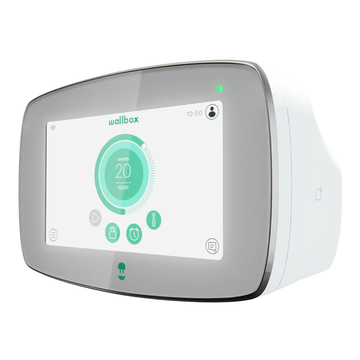
In practice, a CCS charger means DC charging. You will not find a CCS connector on a typical 7–22 kW home wallbox, since home AC charging uses the AC portion of the vehicle's combined inlet. Readers new to the topic can start with what EV charging is.
What Does a CCS Charging Plug and Port Look Like?
A CCS2 plug has a rounded seven-pin Type 2 section on top (three phase pins, neutral, earth, plus the CP and PP signal pins) and two large round DC pins side by side below. It is noticeably larger and heavier than a Type 2 plug.
On the car, a CCS2 inlet appears as a tall, figure-eight-shaped socket, often with a small cover over the lower DC section. A Type 2-only car, such as many PHEVs, has only the upper Type 2 socket.
The cable is another tell. High-current DC conductors, sometimes liquid-cooled at high-power stations, make the tethered CCS cable much thicker than a typical Type 2 AC cable.

CCS1 vs CCS2 Chargers: Combo 1 and Combo 2
CCS1 (Combo 1) builds on the Type 1 / SAE J1772 AC connector and is used mainly in North America, while CCS2 (Combo 2) builds on the Type 2 (Mennekes) connector and is used in Europe and many other markets, according to CharIN.
IEC 62196-3 Ed. 2.0 (2022) formalises them as Configuration EE (Type 1-based, AC contacts up to 250 V / 32 A) and Configuration FF (Type 2-based, AC contacts up to 480 V / 63 A). Both have DC contacts rated up to 1,000 V / 400 A.
However, the two plugs are not physically interchangeable. AFIR Annex II requires at least Combo 2 vehicle connectors on EU public DC charging points, so an imported US-market car with a CCS1 inlet cannot directly mate with a European CCS2 DC cable, and its Type 1 AC inlet cannot directly accept a Type 2 cable either. Such drivers may turn to EV charging adapters.
CCS vs Type 2: Is a Type 2 Charger the Same as a CCS Charger?
No, a Type 2 charger provides AC charging and is not a CCS charger. However, a CCS2 car uses the Type 2 section in the upper part of its CCS inlet for AC charging, so the two interfaces are related rather than competing.
Can you plug a Type 2 cable into a CCS2 port? Yes. The Type 2 plug fits the upper section of a CCS2 inlet, and the car charges on AC as normal. The reverse does not work: the two DC pins on a CCS2 plug have no matching contacts on a Type 2-only car, so a Type 2-only EV or PHEV cannot use a CCS2 rapid charger.
CCS is also generally much faster. Type 2 AC charging commonly runs at 3.7–22 kW, with Kia Europe rating its Mode 3 cables at 7.4 kW single-phase (32 A) and 22 kW three-phase (32 A). The car's onboard charger caps the AC charging speed; the single-phase vs three-phase split explains why. CCS bypasses the onboard charger and feeds DC directly to the battery, with public chargers commonly rated from 50 to 350 kW.
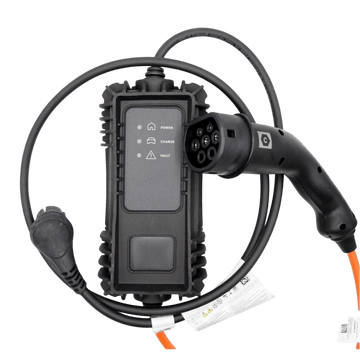
Type 2 therefore suits home wallboxes, workplaces and destinations where the car sits for hours, while CCS suits motorway hubs and shorter charging stops. A European CCS driver typically carries a Mode 3 Type 2 cable for untethered AC charging and does not need to carry a CCS cable.

How Fast Is a CCS Fast Charger? 50 kW to 350 kW Explained
A CCS fast charger commonly delivers roughly 50 kW to 350 kW DC, so a 10–80% session can take about 18 minutes on some of the fastest 800 V cars and considerably longer on a 50 kW unit, depending on battery size and charging curve. Public chargers commonly fall into several power ranges:
- 50 kW rapid chargers
- 100–150 kW high-power chargers
- 350 kW ultra-rapid chargers such as IONITY; Tesla V3 Superchargers peak at 250 kW
The Hyundai IONIQ 5 shows what the top tier means. According to Hyundai's June 2021 press kit, its 800 V E-GMP platform charges from 10 to 80 per cent in 18 minutes on a 350 kW charger, yet still works on 400 V chargers without adapters. Since power equals voltage multiplied by current, an 800 V architecture can reach high power with less current, reducing resistive losses and heat.
However, a car rarely draws the charger's rated maximum. IONITY support puts it plainly: the EV determines the power it can accept, so a car limited to 70 kW will draw no more than 70 kW from a 350 kW station. Fastned adds that charging speed generally drops at higher states of charge and slows further towards 100%. Cold battery packs can also charge more slowly, which is why many EVs precondition the battery before a planned charging stop. Realistic session times are covered in how long charging takes.
The connector sets one of the limits. IEC 62196-3 rates CCS contacts at up to 1,000 V / 400 A, while IEC TS 62196-3-1:2020 covers thermally managed assemblies rated up to 1,500 V / 500 A. Because resistive heating rises with the square of current, high-power CCS cables may use liquid cooling.
Can a Tesla Use a CCS Charger?
Yes, in Europe and the UK. Tesla states that CCS charging is compatible with every Model 3 and Model Y, as well as Model S and Model X vehicles built in May 2019 or later. Pre-May 2019 Model S and Model X vehicles require Tesla's CCS Combo 2 upgrade to use CCS2 charging. In North America, compatible Tesla vehicles can use CCS1 chargers with an adapter.
According to Tesla UK support, all V3 Superchargers in Europe use single-cable CCS technology and peak at 250 kW, while V2 posts carry both DC Type 2 and CCS Combo 2 cables. This is also why compatible non-Tesla cars can use Superchargers that are open to other EVs: Tesla states that Supercharging for other EVs is only accessible to CCS-enabled vehicles.
For pre-May 2019 Model S/X, Tesla offers a factory CCS upgrade (CCS Combo 2 adapter plus installation, £211 in the UK) rated at up to 142 kW. Third-party CCS2 to Tesla adapters also exist, but their compatibility and authorisation depend on the vehicle and charging network.
In North America, Teslas use the NACS (SAE J3400) port, so compatible models need a CCS1-to-NACS adapter to use third-party CCS1 stations, while selected Superchargers offer a built-in Magic Dock adapter for CCS1 cars.
How Do You Use a CCS Charger at a Public Charging Station?
Park, authenticate, plug in the tethered CCS cable, wait for the handshake, and stop the session before unplugging. With compatibility and speed settled above, the routine itself is short:
- Filter for "CCS" in Zap-Map, PlugShare or Open Charge Map.
- Authenticate via app, RFID card or ad hoc payment method; AFIR Article 5(1) requires publicly accessible points deployed from 13 April 2024 to support widely used electronic payment methods, with specific requirements depending on charging power.
- Plug in: car and charger negotiate the charging session via DIN SPEC 70121 or the ISO 15118 family; Plug & Charge-compatible cars and chargers can authenticate automatically through the charging connection.
- The connector locks during charging and releases when the session ends.
- On long trips, stopping around 80% can save time because charging speed generally tapers at higher states of charge.
DC rapid charging generally costs more per kWh than home AC, so it is often used mainly for journeys. AFIR Article 3(4) requires publicly accessible charging pools for light-duty EVs along the TEN-T core road network in each direction of travel, with a maximum distance of 60 km between them and at least 400 kW per pool by 31 December 2025. The full routine is in how to charge an electric car.

Do You Need Your Own CCS Charging Cable?
No. Public CCS rapid chargers normally have a tethered cable. High-current DC cables are thick and may be liquid-cooled, so drivers do not normally carry their own CCS cable.
EU law mirrors this. AFIR Annex II allows normal-power AC points to have either a Type 2 socket-outlet or a Type 2 vehicle connector, whereas normal- and high-power DC points installed or renovated from 8 January 2026 must have at least a Combo 2 vehicle connector. High-power AC points installed or renovated from that date must likewise have at least a Type 2 vehicle connector.
On street and car-park AC posts, the cable is often yours; on public DC points, it is normally attached to the station.
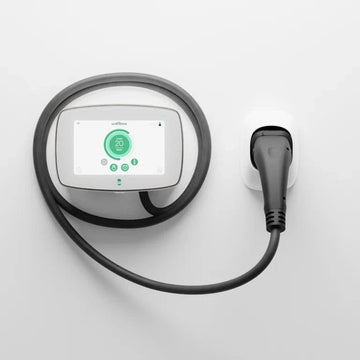
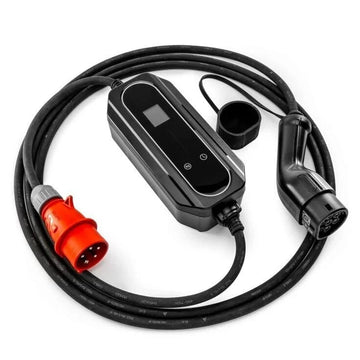
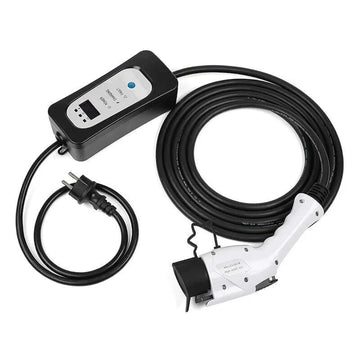
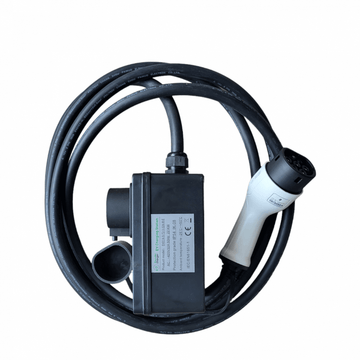
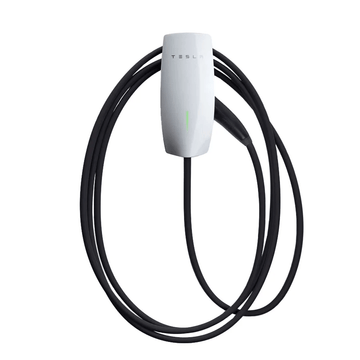
A CCS2 driver therefore typically carries a Mode 3 Type 2 to Type 2 cable, rated at 16 A or 32 A and single- or three-phase to match the car and charging point. Home charging stations at EVChargers.eu, rated at 7–22 kW, are available tethered or untethered.
What Is a CCS Charger: FAQ
What Is the Difference Between a CCS Charger and a CHAdeMO Charger?
Both deliver DC rapid charging, but CHAdeMO, the Japanese standard used by vehicles such as the Nissan Leaf and Mitsubishi Outlander PHEV, uses a separate DC inlet alongside the AC inlet, whereas CCS combines AC and DC charging connections in one vehicle inlet.
CHAdeMO commonly operates at about 50 kW on European networks, while CCS chargers reach 350 kW. IONITY, for example, uses CCS Combo 2 exclusively on its high-power chargers and offers CHAdeMO on Multichargers rated up to 50 kW at many sites in France, the Netherlands, Belgium, Italy and Austria. AFIR does not mandate CHAdeMO, so new EU DC points need not provide it alongside the required Combo 2 connector.
Which Cars Use CCS Charging?
CCS2 is widely used by EVs sold in Europe, including models from Volkswagen Group brands (VW, Audi, Skoda, Cupra, Porsche), BMW, Mercedes-Benz, Hyundai, Kia, Ford, Volvo, Polestar, MG, BYD and Tesla. In North America, many CCS1-equipped EVs remain on the road, but new models are transitioning to the SAE J3400 (NACS) connector.
Check the charge-port flap or handbook nevertheless. Older Nissan Leaf and Mitsubishi Outlander PHEV models use CHAdeMO, many PHEVs support Type 2 AC charging without CCS, and some Chinese-market imports use GB/T, which requires a compatible Type 2 to GB/T adapter for AC charging from a European Type 2 connection.
Is CCS Rapid Charging Bad for My EV Battery?
No, occasional CCS rapid charging is generally safe because the battery management system controls the charging process and the charger supplies power according to what the car requests.
However, frequent DC fast charging can generate more heat and may accelerate battery degradation, particularly when combined with high states of charge or high temperatures. For routine charging, slower AC charging is generally preferable, while CCS is useful for journeys; stopping around 80% can also save time because charging power typically tapers at higher states of charge.
Can an Imported US-Market EV With a CCS1 Port Charge in Europe?
Not directly: European public DC stations use Combo 2 cables, and a Combo 1 (Configuration EE) inlet will not directly accept them. For AC charging, a Type 1 inlet also requires a compatible Type 2-to-Type 1 cable or adapter.
Third-party CCS2-to-CCS1 DC adapters exist as a workaround. The CCS2 to CCS1 adapter stocked by EVChargers.eu lists 50–250 kW, IP67, −30 °C to +50 °C, more than 5,000 connection cycles and IEC 62196-3:2014 compliance on its product page. However, compatibility and approval of third-party DC adapters depend on the vehicle and charging network, unlike Tesla's factory CCS retrofit.
For a CCS2 driver, the shopping list is short: a Mode 3 Type 2 cable for untethered AC points in car parks and on the street, while public DC points have their own tethered Combo 2 cable. At EVChargers.eu, Julius, an EV driver himself since 2018, helps customers match the cable to their car's onboard charger, from single-phase 7 kW cables to three-phase 22 kW versions in lengths up to 10 m, and stocks a CCS2-to-CCS1 adapter for imported US-market EVs.
Orders are dispatched within two business days, with free shipping on EU orders and 14-day returns. Browse the range of Type 2 charging cables, or write to info@evchargers.eu with your car model if you are unsure which rating fits.