
A bigger number doesn't automatically mean faster charging. That's a common mistake many EV owners make when comparing a 7 kW and a 22 kW home charger. While a 22 kW unit may look like the obvious choice on paper, many drivers may see little or no improvement because their home's electrical supply or their car's onboard charger can limit charging long before the wallbox reaches its maximum charging power.
The confusion is understandable. Charger power ratings are often the first specification buyers notice, but they don't tell the whole story. Your home's electricity supply, your EV's onboard charger, and even the charging cable all influence how quickly your battery charges. Without checking these factors first, it's easy to spend more on a charger that delivers the same real-world charging speed as a less expensive alternative.
The good news is that choosing the right charger is much simpler once you know what to look for. In this guide, we'll compare 7 kW and 22 kW EV chargers, explain the differences in charging speed, installation requirements, vehicle compatibility, and charging cables, and help you decide which option is the better fit for your home and your EV.
7kW vs 22kW EV Charger: Key Differences in Speed, Cost and Charging Time
On a three-phase supply with an EV that supports 22 kW AC charging, a 22 kW charger can reduce a full charge from over eight hours to around three. Without both conditions in place, the additional charging power simply goes unused.
The power ratings describe your electricity supply, not just the wallbox:
- 7.4 kW: Single-phase charging at 32 A / 230 V
- 11 kW: Three-phase charging at 16 A / 400 V
- 22 kW: Three-phase charging at 32 A / 400 V
Upgrading from 7 kW to 22 kW is therefore fundamentally a question of your electricity supply, not just the hardware.
According to EV Database figures for the Renault Zoe ZE50 (52 kWh usable), the real-world figures are as follows:
|
Charger power |
Full charge time |
Range added per hour |
|
7.4kW (single-phase) |
8 h 30 min |
~22 miles |
|
11kW (three-phase) |
5 h 45 min |
~33 miles |
|
22kW (three-phase) |
3 h |
~63 miles |
Cost follows the same logic. A 22 kW charger typically costs more, and installation costs can rise significantly if the grid operator must upgrade your electricity supply. A 7 kW single-phase wallbox remains the simplest and most affordable option to install.
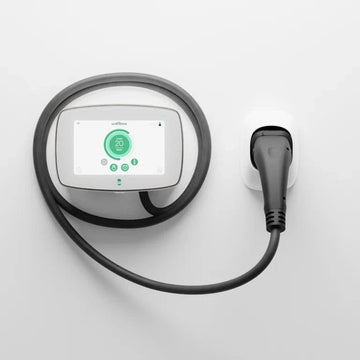
There is also a middle ground. Many EVs cap AC charging at 11 kW, which makes a unit like the Easee Charge Lite 11 kW a practical choice for three-phase homes.

Can Your Car Actually Charge at 22kW? Onboard Charger Limits Explained
Your car's onboard AC charger sets the real charging limit, not the wallbox. Most EVs are limited to 7.4 kW or 11 kW AC charging, and relatively few models support the full 22 kW.
Can you plug a 7 kW-limited car into a 22 kW charger? Yes, safely. The charger and vehicle negotiate the charging rate, so the car simply draws its maximum power. Nothing breaks, but the extra charging capacity may go unused.
Even 22 kW-capable cars face limits. According to EV Database, the Renault Zoe ZE50 accepts 22 kW AC charging, yet on a single-phase supply it drops to 7.4 kW because the charger cannot compensate for the missing phases. That means around 8 h 30 min instead of 3 hours.
Renault models are among the best-known EVs with 22 kW AC charging, while some Audi and BMW models offer it as an option. Tesla models are typically limited to 11 kW AC charging. Check your car's onboard charger specification first, and see our guide to choosing the best EV charger to match your vehicle.
Single-Phase vs Three-Phase Supply: The Deciding Factor
22 kW home charging requires a three-phase connection. No wallbox can work around a single-phase supply; the extra phases simply are not available.
Geography largely settles this question. Three-phase domestic supply is common across much of continental Europe, including Germany, the Netherlands, and the Nordic countries, so 11 kW or 22 kW home charging is often possible there. In the UK and Ireland, however, most homes have a single-phase supply, limiting home charging to around 7.4 kW regardless of the wallbox's rated power.
Not sure which supply you have? Check the main fuse or meter: one live conductor typically indicates a single-phase supply, while three indicate a three-phase supply. An electrician or your distribution system operator (DSO) can confirm this. Supply upgrades may be possible, but they involve the grid operator, additional costs, and lead time.
Three-phase households can browse 22 kW home chargers with confidence, while single-phase households should compare EV wall chargers rated for their supply.
7kW vs 22kW EV Charger Cables: What's the Difference?
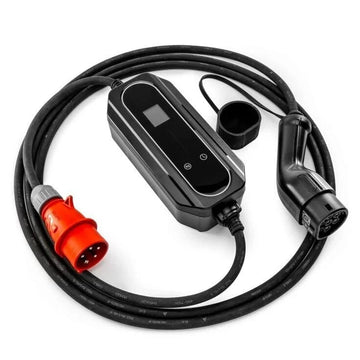
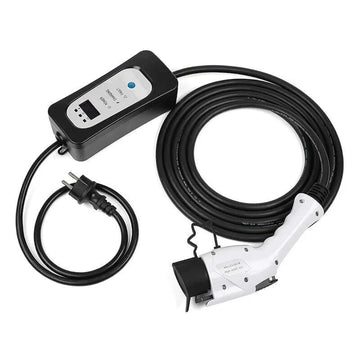
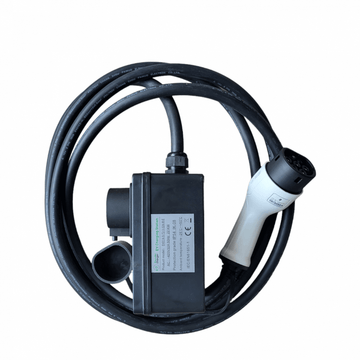
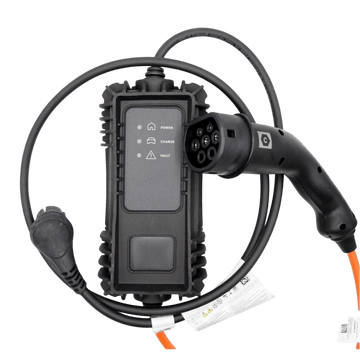
A 7 kW cable is typically a single-phase 32 A Type 2 cable, while a 22 kW cable is a three-phase 32 A Type 2 cable with all three phase conductors connected. Externally, they look almost identical; internally, the number of conductors differs.
That internal difference matters in practice. A single-phase cable on a three-phase charger can limit charging to around 7.4 kW, even if both the car and wallbox support 22 kW, because only one phase carries current.
A three-phase 32 A cable is the more versatile choice. It is backward compatible, so it also works with single-phase chargers, making a 22 kW charging cable a practical future-proof option.
The trade-off is minor: three-phase cables are typically heavier and slightly more expensive. If your charger is tethered, such as the Zappi, which is available in 7 kW and 22 kW versions with a fixed cable, you cannot replace the cable later. Untethered units, however, let you choose from a wider range of charging cables.

7kW vs 22kW EV Charger: FAQ
Quick answers to the most common questions buyers ask before choosing between a 7 kW and a 22 kW home charger.
Is a 22kW charger worth it for home charging?
For most single-car households, not necessarily. A 7.4 kW unit can comfortably recharge most current EVs overnight, since even a 52 kWh battery takes around 8 h 30 min to charge from empty. The extra capacity of a 22 kW charger may therefore go unused for typical daily driving.
It becomes worthwhile only when three conditions align:
- A three-phase supply at your home
- A 22 kW-capable EV
- A genuine need for fast daytime top-ups, such as multiple EVs or high daily mileage
That combination is more common in continental Europe.
Is slower 7kW charging better for my car's battery than 22kW?
Not meaningfully. Both 7 kW and 22 kW use AC charging, which the car's onboard charger converts to DC at a controlled rate, so both are generally gentler on the battery than rapid DC charging at 50 kW and above.
At these power levels, the difference in long-term battery degradation is generally considered negligible. Battery health should not be the main factor in your decision. Your electricity supply and your car's onboard charger limit are typically more important.
How long does it take to charge an EV at 7kW vs 22kW?
At 7.4 kW, expect roughly 22–30 miles of range per hour and a full charge in around 8–12 hours, depending on battery size. At 22 kW, the rate can increase to roughly 63–75 miles of range per hour, with a full charge in about 3–4 hours.
However, the faster figures apply only if your car supports 22 kW AC charging and your home has a three-phase supply. Otherwise, charging is limited to single-phase speeds, as the Renault Zoe comparison table in the first section shows.
The right choice comes down to your electricity supply, your car, and your daily routine. If your home has a three-phase connection and your EV supports higher AC charging power, a 22 kW home charger can deliver faster daytime top-ups. If you're on a single-phase supply, a quality 7.4 kW wallbox will typically meet your overnight charging needs.
At evchargers.eu, we serve both the European three-phase market and single-phase households, offering certified chargers and compatible cables for each. Check your electricity supply, check your car's onboard charger, and choose the unit that fits your needs rather than simply the biggest number on the box.