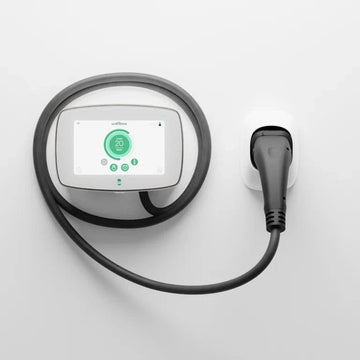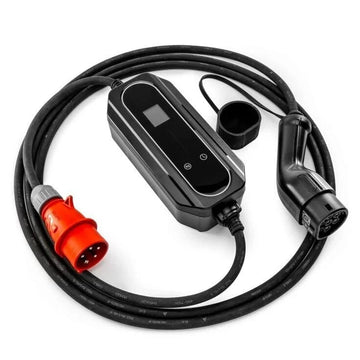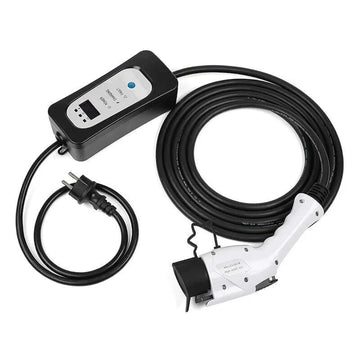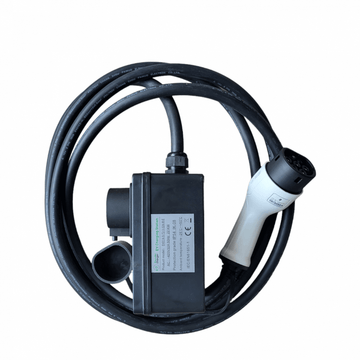

Untethered EV chargers solve one obvious problem: there’s no permanently attached cable hanging from the wall. But that extra flexibility comes with a catch. Once the cable becomes a separate part of the setup, choosing the right charger is no longer just about comparing 7.4, 11, or 22 kW — the socket, cable rating, and electrical protection all matter too.
That makes some specifications far more important than they first appear. A 22 kW wallbox paired with the wrong cable won’t deliver 22 kW, while an outdoor socketed charger needs sufficient protection to cope with rain, dust, and daily use. Features such as MID metering, smart tariff scheduling, and solar integration can also make one seemingly similar charger a much better fit than another.
So the best untethered EV charger isn’t simply the one with the highest power rating. This guide compares leading options, including Zaptec, Easee, Wallbox, Zappi, and Ohme, while breaking down charging speed, durability, safety requirements, installation costs, and the Type 2 cable needed to get the full performance from each setup.
Best Untethered EV Chargers: Our Top Picks Compared
An untethered charger has a Type 2 socket instead of a fixed cable, which leaves the socket exposed to weather and knocks. Our 2026 picks were therefore judged on enclosure ratings (IP/IK), safety compliance, smart features, and value — the criteria that matter most for a socketed unit.
Every pick works with any Type 2 EV, including Tesla models sold in Europe. Each entry lists power output, one standout datasheet specification, and a one-line verdict.
Zaptec Go 2: Best Overall Untethered Charger
The Zaptec Go 2 leads this list because its product sheet reads like a checklist of untethered essentials: an IP54 / IK10 enclosure, a UL94 5VB flammability rating, UV resistance, a −30 °C to +50 °C operating range, overvoltage category III, and an electronic socket lock.
Uniquely among these picks, it has a MID Class B meter certified to EN 50470-1/-3, making it suitable for company-car drivers who need to claim charging costs. It also includes an RDC-DD (6 mA DC) compliant with IEC 62955, though local regulations may still require an external circuit breaker and RCD.
Verdict: the safest all-round choice for most homes.
Easee Charge Lite: Best Value Smart Charger
The Easee Charge Lite 11kW delivers 11 kW three-phase output with an IK10 impact rating, overvoltage category III, and a −30 °C to +40 °C operating range, according to the September 2024 datasheet.
However, the datasheet states that it is not MID compliant, so it cannot provide certified consumption data for reimbursement. Fine for private home charging, but not suitable for expensed use. It also requires an external Type A RCD, so factor that into the installation cost.
Verdict: strong smart hardware at a competitive price for private drivers.
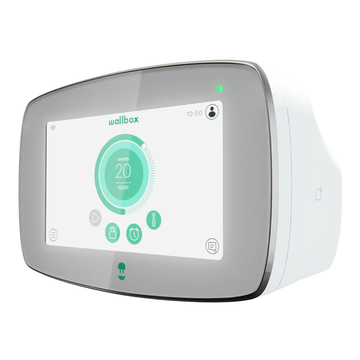
Wallbox Pulsar Plus Socket: Best Compact All-Rounder
The Pulsar Plus Socket offers the strongest ingress protection here: IP55 / IK10, CAT III, and a −30 °C to +50 °C operating range, with derating above 40 °C, according to its technical datasheet. Its Type 2 socket has a shutter compliant with NF C 15-100.
Internal 6 mA DC leakage detection meets IEC 62955 tripping characteristics, so an external Type A RCD is sufficient. Verdict: the best choice for fully exposed outdoor walls.
myenergi Zappi (Untethered): Best for Solar Homes
For households with photovoltaic panels, the myenergi Zappi remains the standout choice because its charging modes divert surplus solar generation directly into the car. As a result, homes with PV can charge partly on self-generated electricity rather than grid power.
The untethered Zappi retains all the smart features of the tethered version while offering a tidier wall-mounted setup and greater cable flexibility.
Verdict: choose it if solar integration is your priority.
Ohme ePod: Best for Smart Tariff Charging
The Ohme ePod earns its place through tariff optimisation: its app schedules charging during cheaper off-peak electricity periods, which is where most home-charging savings come from.
It is a compact untethered unit, so you can supply your own Type 2 cable and choose the length that best suits your driveway.
Verdict: the best choice if your electricity supplier offers a time-of-use EV tariff.
22 kW Three-Phase Socket Station: Best for Full Three-Phase Power
Full 22 kW output only makes sense for homes with a three-phase supply and a car whose onboard charger accepts 11–22 kW AC. Most EVs cap AC charging at a lower rate, so check your car's specifications first.
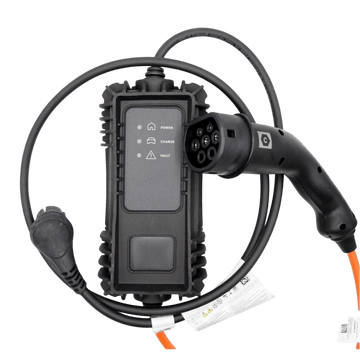
This 22 kW Type 2 socket station is a practical choice because it includes a separate 5 m Type 2 cable. However, delivering the full 22 kW requires a 32 A-rated cable, as explained below.
Tethered vs Untethered EV Charger: Which Is Better for Your Home?
A tethered charger has a cable permanently attached to the unit, while an untethered charger has a Type 2 socket that you plug your own cable into. Neither charges faster; the difference is purely practical.
|
Factor |
Tethered |
Untethered |
|
Cable |
Fixed and included |
Bought separately |
|
Upfront price |
Higher |
Lower |
|
Car compatibility |
Limited to fitted connector type |
Any Type 2 EV |
|
Daily convenience |
Grab and plug in |
Connect both ends |
|
Future-proofing |
Limited to fitted cable |
Swap cables anytime |
|
Wall tidiness |
Coiled cable on display |
Clean socket only |
Untethered chargers suit multi-car households, drivers likely to change cars, hosts with visiting EVs, and owners of legacy Type 1 vehicles, since a Type 2-to-Type 1 cable bridges the gap. Tethered chargers suit one-car households that prioritise grab-and-plug convenience above all else.
Worried the socket will wear out from daily use? It won't. Type 2 couplers are type-tested for 10,000 mating cycles without load plus 50 under load, with insertion force kept below 100 N (TE Connectivity spec 108-94323, according to IEC 62196-1). Two extra plug-ins per session remain comfortably within the design limits.
Advantages and Drawbacks of an Untethered EV Charger
Beyond that head-to-head comparison, the socketed design brings five practical benefits:
- Works with any Type 2 EV, including European-market Tesla models
- Lets you choose a cable length that suits your driveway
- Keeps the wall tidy with no coiled cable
- Typically costs less than the tethered equivalent
- Allows inexpensive cable replacement if the lead gets damaged
However, there are some drawbacks. You need to plug in both ends for every charging session, and the cable needs somewhere to be stored in winter rather than staying coiled outside. Theft is a limited risk if the cable is left connected overnight, although most chargers and cars lock the connector during charging.
The bigger issue is exposure. A mated Type 2 connector is rated IP44, while an unmated socket is rated only IP20, or IP24 with its cap fitted (TE Connectivity spec 108-94323). Consequently, the wallbox enclosure provides the main protection, which is why IP55/IK10 ratings matter for untethered buyers.

How Much Does an Untethered EV Charger Cost to Buy and Install?
A fully installed untethered charger commonly costs around £800–£1,100 in the UK, according to installer market data, with a basic installation accounting for roughly £300–£400 of that. The unit itself typically costs less than its tethered equivalent because no cable is included.
Does installation cost more for a socketed unit? No. Labour costs are essentially identical for tethered and untethered chargers, since the wiring, circuit protection, and wall mounting are the same. The price difference comes entirely from the hardware and the separately purchased cable.
Budget for the cable too. A quality Type 2-to-Type 2 cable adds to the overall cost, depending on its current rating (20 A vs 32 A) and length (5 m, 7.5 m, or 10 m).
Finally, the mandatory RCD protection covered below can increase installation costs if your consumer unit needs upgrading, so ask your installer to assess this during the site survey.
What to Look For When Buying an Untethered Home EV Charger
A socketed unit splits the buying checklist into three parts: the wallbox itself, the safety installation behind it, and the cable you pair with it. Each sets its own limits, so all three deserve equal scrutiny in 2026.

The Cable Sets Your Real Charging Speed
On an untethered charger, the cable itself sets the current limit. A resistor between the proximity pin (PP) and earth indicates the cable's rating: 1.5 kΩ = 13 A, 680 Ω = 20 A, 220 Ω = 32 A. The station reads this resistance and limits or interrupts the supply accordingly (TE Connectivity spec 108-94323, according to IEC 61851-22 Annex B).
The arithmetic matters. A 22 kW wallbox paired with a 20 A cable delivers roughly 13.8 kW on a three-phase 400 V supply, and only about 9 kW with a 13 A cable. The number on the box is meaningless if the cable is underrated.
There is a physical difference too: conductor cross-sections are typically 2.5 mm² for 20 A cables and 6 mm² for 32 A cables (IEC 62196-1), which is why a 32 A cable feels heavier and is stiffer to coil.
Choose accordingly. A Mennekes 20 A three-phase cable suits 11 kW chargers, while a Mennekes 32 A cable is needed to make full use of a 22 kW socket.
The rule is simple: actual charging power is always limited by the lowest of three ceilings — the car's onboard charger, the station's rating, and the cable's PP-coded rating (Schneider Electric, Electrical Installation Guide).

Safety and Installation Requirements You Must Not Skip
Under BS 7671:2018+A2:2022 Regulation 722.531.3.101, every socketed charging point compliant with BS EN 62196 requires an individual 30 mA Type A, F, or B RCD that disconnects all live conductors. A Type B RCD is required unless the charger includes an RDC-DD compliant with IEC 62955, according to IET Wiring Matters (May 2024).
Treat “no external RCD needed” marketing claims with caution. RCD functionality built into a charger's circuit board may not conform to the required product standards (BS EN 61008-1, 61009-1, 60947-2, 62423), and Swedish authorities banned one manufacturer's sales partly over its integrated electronic RCDs.
The datasheets specify different requirements for each brand: the Easee Charge Lite requires an external Type A RCD; the Zaptec Go 2 includes an RDC-DD but still requires external protection under local regulations; and the Wallbox Pulsar Plus Socket provides 6 mA DC leakage detection compliant with IEC 62955.
Beyond the RCD, complete the checklist:
- IP/IK enclosure rating suitable for outdoor mounting
- PEN fault protection where required by the supply
- App scheduling for off-peak tariffs
- MID-certified meter if reimbursement is required
Best Untethered EV Chargers: FAQ
Are Untethered EV Chargers Any Good?
Yes. Untethered chargers cost less per unit, work with any Type 2 EV, and leave a tidier wall. Durability is not a concern because Type 2 couplers are type-tested for 10,000 mating cycles.
The trade-off is connecting your own cable at both ends for each session. The Zaptec Go 2 shows how capable socketed units have become.
Do Untethered EV Chargers Come With a Cable?
Most do not, so you need a separate Type 2 charging cable, though many new EVs include one in the boot. Common lengths are 5 m, 7.5 m and 10 m, and the cable's amp rating must match the charger's output to deliver full power. Browse Type 2 charging cables for suitable options.
What's the Difference Between a Tethered and an Untethered EV Charger?
A tethered charger has a cable permanently fixed to the unit; an untethered charger has a Type 2 socket that you plug your own cable into. Charging speed is identical. The comparison table above weighs convenience, price and future-proofing for both types.
Which Is Better: A Tethered or an Untethered EV Charger?
It depends on your household. Untethered chargers offer greater flexibility, future-proofing and lower upfront costs, since the socket is not tied to a single car. Tethered chargers offer greater day-to-day convenience.
The rule of thumb: if you might change cars, run two EVs or host visiting EV drivers, go untethered. Otherwise, tethered saves a few seconds each day.
Can I Use an Extension With My Untethered Charger Cable?
Extending an EV charging cable is not recommended because connections introduce overheating risks and rating mismatches between the two cable sections. The safer solution is a single correctly sized cable, and a socketed charger makes that easy: simply buy a longer one. Our guide on extending an EV charging cable covers the risks and alternatives.
Choosing an untethered charger is really two decisions: the wallbox on the wall and the cable that sets its true power ceiling. At EV Chargers, we stock both, from the compact Easee Charge Lite to Type 2 cables rated for 20 A and 32 A three-phase use.
If you are unsure which combination suits your car and home supply, our team is happy to talk it through before you buy. A correctly matched socket and cable will serve both your current EV and your next one, which is exactly the future-proofing an untethered setup promises.